Over the course of semester two thus far I have made a consistent effort to attend most tutorials and lectures as well as engage in all required readings. This blog has been an important part in my learning and I have enjoyed the process of further analysing and reflecting upon course materials. It has also made engaging in tutorials and lectures more meaningful as I was able to further investigate information and form my own opinions. Completing regular weekly blog posts was a goal I set for myself at the beginning of the semester and I believe I have successfully achieved this. While this required significant time management in order to accomplish over the minimum ten posts, organisation is a skill I pride myself on. In addition to this blog assignment I enjoyed the Pecha Kucha presentation as I always welcome the opportunity to practise public speaking, as being a confident speaker is an important feature of teaching.
Reflecting upon DESN1002 in comparison to DESN1001 in semester one, I believe this semester has been more individual and has required a higher level of independent thought. Furthermore this is an aspect of learning that I thrive at. However I do understand the value of group work especially in tutorials and believe that this form of collaboration is an area of learning I still must work to enhance. Yet through seeing the assignments of my peers and evaluating my own and the work of others, I have been able to improve these qualities within my learning. I like that this course always provides greater questions on topics that relate to larger ideas rather than just design. In turn often many other courses lack this kind of significance.
The question I have chosen to discuss for DESN1002 assignment three is; now that every phone has a camera. How has this affected the way in which social/ political events or issues are shaped by citizen visual communication? Is the quality of imagery produced becoming less refined or composed, and are images losing power due to the copious amounts produced? Make sure you contextualise your discussion within a larger cultural framework.
I plan to break this question down into three areas; citizen journalism, image quality and mass-produced images. Within each component I will address a specific question in relation to the question. This will provide a discussion that delves deeper that the original assignment question. To strengthen each point I shall provide examples of events, studies, timeframes and theorists to contextualise my writing.
Citizen Journalism: How has citizen journalism affected social/ political events?
Main ideas
Can turn small events into larger events
Audience now controls the media
Anyone can be a reporter with a camera phones
Consequences can arise from civilian journalism including national security in times of crisis
Can unintentionally encourage crime
Can spread faster than traditional media
Contextualisation
Boston Marathon Bombing, Boston USA, 2013 -social/political
Creepy Clown Craze, Australia 2016 – social
Image quality: Has image quality become less refined? Have camera phones decreased the quality of human experiences?
Main Ideas
People are taking better photos today due to the high quality of the camera phone and its accessibility
Camera phones are still not as good quality as a digital camera, however as they are apart of daily life and society, we accept the decrease in quality.
Is the profession of photography in danger?
Has the way we experience life changed, impacting our quality of life?
Has the camera phone replaced human functions such as memory?
Contextualisation
Doug Mann- Jean Baudrillard’s simulacra
Soares and Storm (2018) ‘Photo-Taking-Impairment Effect’ study
Mass produced images: Has the mass-production of images changed the power of images?
Main Ideas
We are taking more photos than ever
Reproduced through the Internet/ social media
Stock images; Do stock photographs hold as much power as images considered photojournalism?
Authorship
Photoshop; is truth and authenticity still achievable?
Contextualisation
Roland Barthes (1977) ‘Death to the Author’
Simon Dumenco (2012)
By Chelsea Buswell.
References:
Soares, J. S. and Storm, B. C. (2018) ‘Forget in a Flash: A Further Investigation of the Photo-Taking-Impairment Effect’, Journal of Applied Research in Memory and Cognition, 7(1), pp. 154–160. doi: 10.1016/j.jarmac.2017.10.004.
Barthes, R “Death of the Author” in Barthes R. Image, Music and Text, New York Hill & Wang
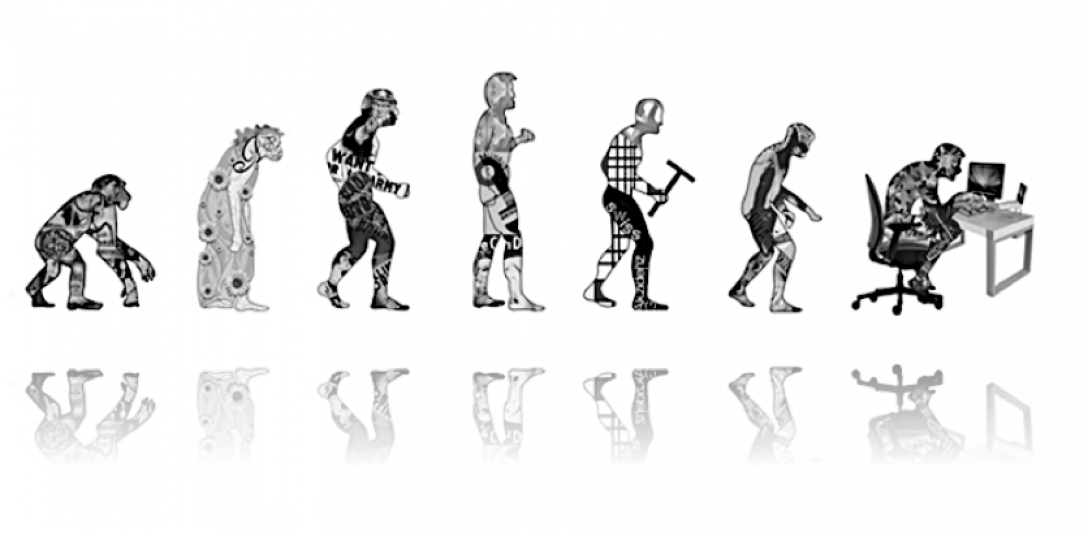
Cramer (2014) opens the journal article with an example of a meme, in which features a hipster and his typewriter. This sets the scene regarding the concept of the post-digital era as Cramer (2014) is outlining the rejection to high-tech devices and values through the niche hipster group. A renaissance of old devices and materials has become a trend within the post-digital era.
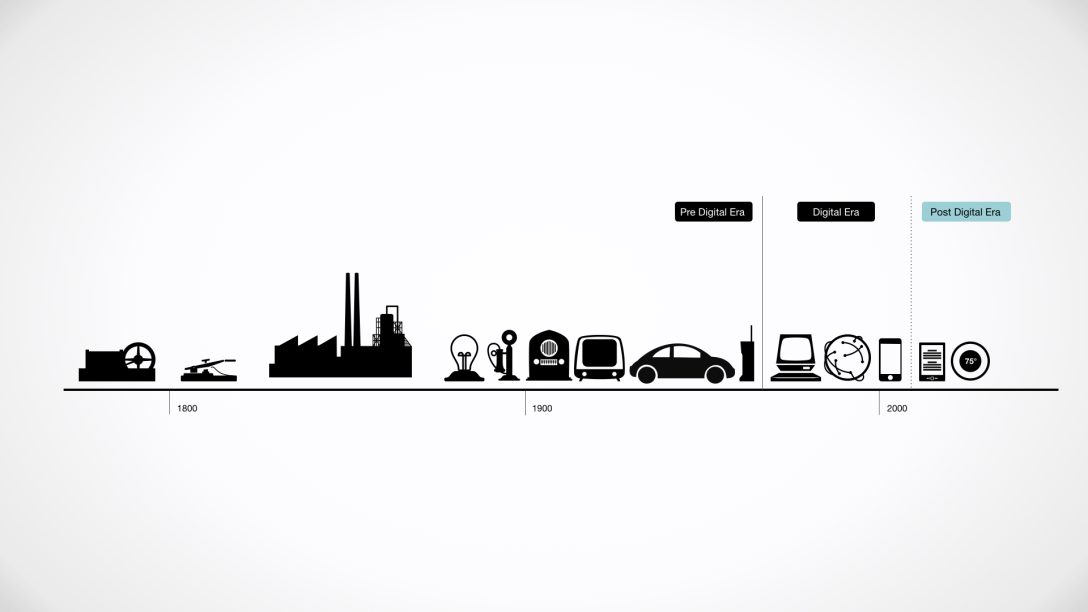
Cramer (2014) also debates the meaning of post-digital, drawing from a number of sources and theorists to form a definition. He describes that post-digital does not mean the end of the digital era but rather mutations of technology and culture and that the term highlights individuals whom oppose technological changes and advances. Cramer (2014) adds that there are two deeper understandings of the concept. One being the rejection of high tech and the other the rejection of low digital quality. As such people whom oppose the post-digital era may do so because they don’t see the point in over complicating things with high tech or because of quality e.g vinyl records sound better than CD’s. However it is also about personal preference, what devices do the best job for it’s intended purpose. As Cramer (2014) explains with the hipster meme, the purpose of the typewriter was because the user was writing personal narratives for consumers and therefore wanted a more authentic feel rather than a computer written document. This highlights the importance of using the right technology for the task and hoe experience changes purpose. In relation to this Cramer (2014) illustrates that the agency is also significant. This means that the control over the technology and the outcome are different depending on the task. Cramer (2014) discovered that a lot of people prefer hand making posters, brochures etc. because they felt as though they had more control and were therefore able to experiment better by physically designing something themselves. As such this post-digital mindset rejects the high-tech resources in comparison to manual output.
In conclusion, Cramer (2014) raises an interesting discussion about the post-digital era and what it means to be post-digital. The ideas of hipsters, authentic experiences, technological disruption, choice of technology and control are analysed along with many other similar topics.
By Chelsea Buswell.
References:
Cramer, F. (2014). What is Post-digital? APRJA, 3(1).
S, Sirpal (2016). Productecture: Designing for the Post-Digital Era · PubPub. Available at: http://v2.pubpub.org/pub/productecture (Accessed: 12 October 2018).
Barthes, (1977), R “Death of the Author” in Barthes R. Image, Music and Text, New York Hill & Wang
Barthes (1977) ‘Death of the Author’ highlights how as readers we often attempt to associate meaning within a text to the authors personal ideals, values, context and experiences. Essentially Barthes (1977) illustrates that writing is not a reflection of the authors identity and should be instead open to the interpretation of the reader. The author is no longer relevant in todays society. Often literature, photographs, paintings etc. are created from a variety of sources. This entails that regardless of the author there is no origin to the piece and while the pubic analyses the work as a product of our society, we cannot find explanation within the author. Barthes (1977) also discusses how Surrealism desacralised the image of the author. In turn this describes how the movement removed the author from the product due to its illogical reason to norms and conventions. As such products are the creation of a blend of unoriginal forms as promulgated in the quote “life never does more than imitate the book, and the book itself is only a tissue of signs, an imitation that is lost, infinitely deferred” (Bathes, 1977, p.g 2).
‘Cultural Interfaces’
Manovich L; (2001) “Cultural Interfaces” in Manovich L. The Language of New Media, Cambridge, Mass. MIT Press, pp 69 – 88
Within this reading Manovich (2001) analyses how cinema has changed society. It was a new artistic language and particularly in todays society it is apart of our daily lives. The original purpose of the computer was to replace objects and systems such as typewriters and the paintbrush. However nowadays it has become a universal media machine replacing speech, memory and a range of other natural human functions with the creation of the mobile phone. Additionally the mobile phone is the biggest cultural interface thus far. Manovich (2001) discusses how it is interesting that the more young computer and mobile users and designers that grow up in todays culture, the more we accept the features of cinema. This is truly a cultural influence that is constantly developing to suit the needs of today. According to Manovich (2001) there are three important cultural forms including print, cinema and graphical user interface (GUI). Furthermore these provide the foundations of new media and cultural conventions.
The introduction of digital technology greatly influenced and revolutionised graphic design in the early 1980s (Staples, 2000). Prior to this everything was handmade using a range of different techniques. Digital technology advances allowed for design exploration and a challenging of the norms of visual communication, writing and reading.
April Greiman was one of the first designers to use and experiment with computers in her designs. She graduated from the Basel School of Design in Switzerland and in the mid 1970s began her design career in New York City (AIGA, 2018). While she was well educated on the standard practises of design and typography, in her own career she began to push these design boundaries. Seeking something different Greiman moved to Los Angeles, in which offered a limited aesthetic (AIGA,2018). However it allowed Greiman to further push design boundaries.
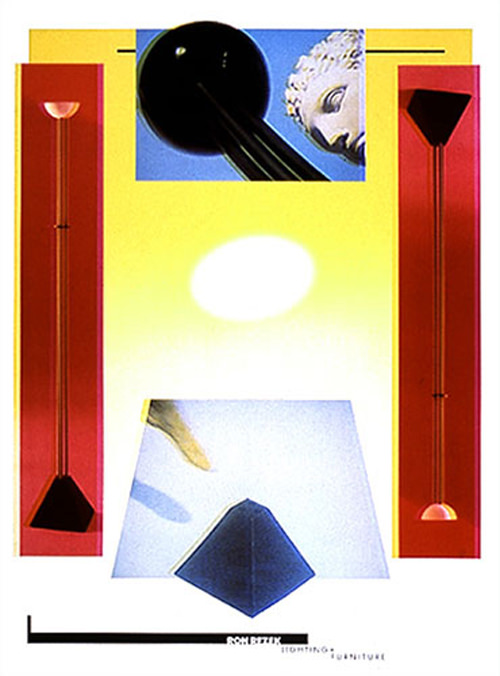
With the Macintosh computer entering the market in 1984, many designers were opposed to its existence and highly skeptical of its advantages to the field (AIGA, 2018). Intrigued by the technology, Greiman experimented with digital imaging and typography within her printed work (Staples, 2000). This digital platform allowed Grieman to incorporate pixellated letterforms and pictures in her design practise and style. Soon Grieman would also explore the use of video imagery and New Wave typography (AIGA, 2018). “Iris Light” was the first of Grieman’s successful pieces that utilised digital technology.
Greiman is an interesting design figure to analyse as while she was educated in a classical design practise, she incorporates modernist design elements in her later work. She welcomed digital technology in design at a time when the majority of design influencers were against the transition.
By Chelsea Buswell.
April Greiman“Iris Light”
References:
Staples, L. (2000) ‘Typography and the Screen: A Technical Chronology of Digital Typography, 1984 amp;#8211;1997’, Design Issues, 16(3), pp. 19–34. doi: 10.1162/07479360052053306.
My Pecha Kucha on Surrealism focused deeply on the history and evolution of the topic. This included information on a range of influential figures and examples of different types of Surrealism.
Visual Presentation:
After viewing the presentations of my fellow classmates I believe my presentation could have been more aesthetically pleasing and used a consistent image scheme. Many of the presentations used a colour palette, which was consistent throughout the presentation. One girl even created her own images/ animations. This made the presentation more effective and correlated well with the nature of the content. My presentation included one picture per slide, which is typically what a Pecha Kucha entails. However I liked that other presentations included more than one picture per slide with the use of grids and layout to make it visually appealing. In future assignments it is important that I include more of these visual communication techniques. While the task brief was to create a Pecha Kucha many of my classmates incorporated text alongside their images. Personally I believe this looked better and made it easier for the audience to understand the topic, yet I am unsure as to whether this is the brief of a Pecha Kucha. Overall I believe I could have spent more time better coordinating images and layout, therefore this is an area I would like to improve on in the future.
Verbal Presentation:
My Pecha Kucha was well timed and practised. When I was creating my verbal presentation I was persistent to make sure the slides and speech were seamless so it was easy for the audience to follow. I believe the pace, expression and volume of my verbal presentation was good as I am fairly confident with pubic speaking. I also made sure I maintained a high level of eye contact in order to engage the audience.
Clear Argument/ Structure:
One area I believe I could improve upon in the future is ensuring that I clearly outline what I am going to be addressing in my presentations/ writing tasks. One of my classmates outlined all the important sub topics she was going to talk about in the beginning and this provided a clear structure. Apart from this critic, I believe my Pecha Kucha followed a clear argument and structure by first revealing the history of Surrealism with influential figures and examples, then discussing the affect of Surrealism in todays society.
Evidence of Research:
Within my verbal presentation I had many references to quotes from influential Surrealist figures and academic literature. I concentrated on my depth of my research ensuring I included all views of the topic and accurate historical representations. This form of independent research is an area of writing I excel at and enjoy.
Overall I am satisfied with my Pecha Kucha, although there are areas that I should seek to develop for future presentations. I often tend to focus to highly on the content of the presentation and not enough on the visual aspect. As such I need to think differently and devote more time to working on visual communication techniques. Also I should attempt to structure the introduction of my presentation/ writing tasks more clearly in order to establish my content.
The topic of my Pecha Kucha was Surrealism. Homer and Kahle (1986) define surrealism as a form of art that was devised to capture the idea of dreams and similar extraordinary experiences. I find Surrealism particularly interesting because it provides an escape from the restrictions of reality and allows for an unconstrained form of expression.
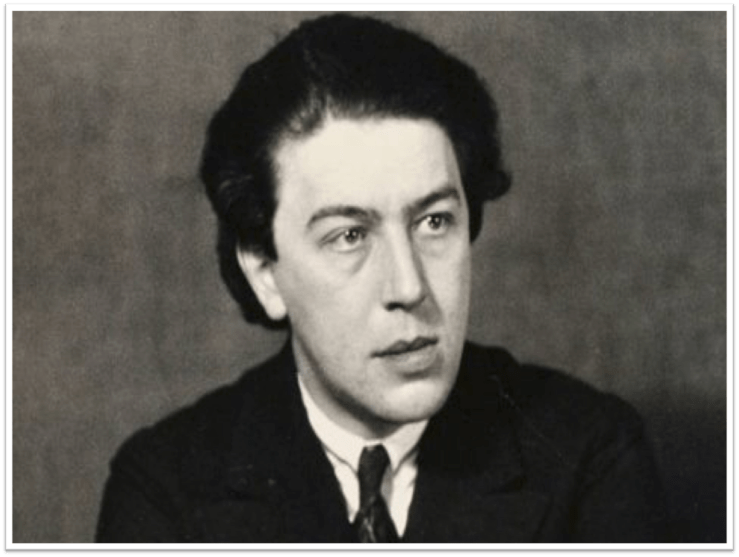
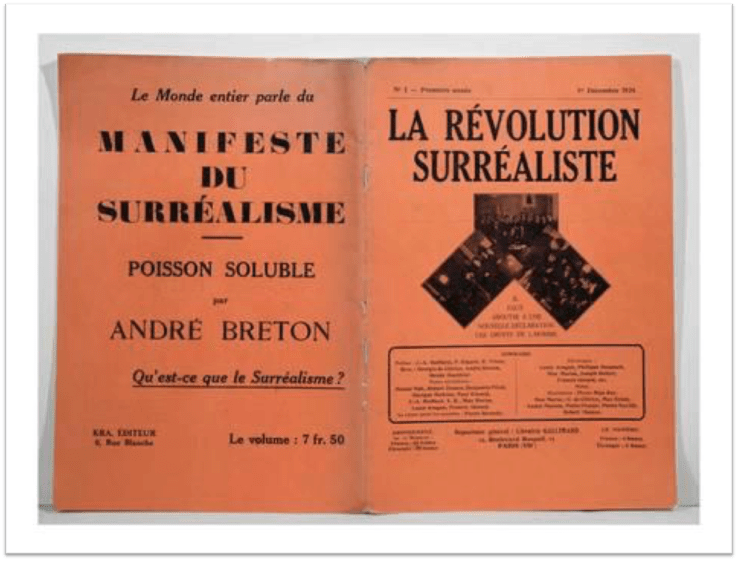
Surrealism came about after WW1 in Paris. Dadaism (the movement prior to Surrealism) also attempted to redefine social constructs about art and life and thus through this Surrealism was created. This extension of Dadaism was developed by Andre Breton in 1924 with his ‘Manifesto of Surrealism’ (Lusty, 2016). Europe experienced great devastation after WW1 particularly within their political system (Cornelius, G, M. 2015). Breton lived alone and in near poverty. Therefore his creation of Surrealism provided an escape from the dull restrictions of reality (Thiher, 1997).
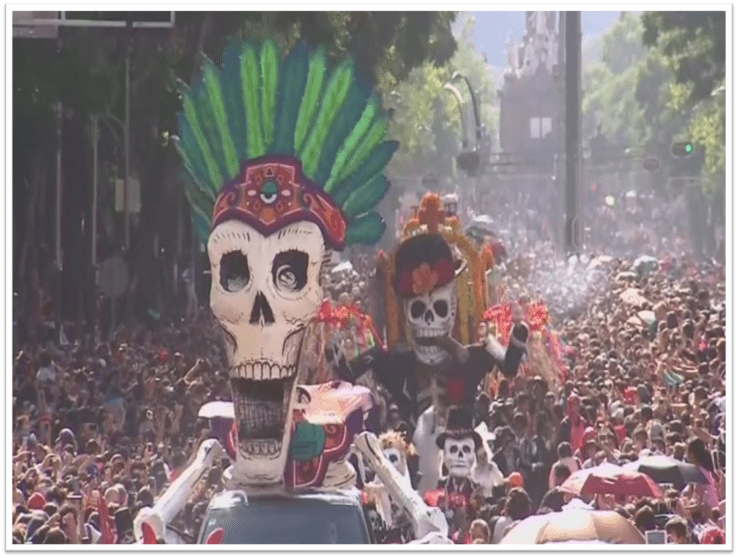
Breton was inspired by primitive and tribal objects, and he sought to explore if Surrealism existed in other parts of the world. Mexico was one of the main countries that resonated with Breton and he recognised it as a completely Surreal society. Breton was fascinated at how Mexican culture stylised typically tragic events such as ‘The Day of the Dead’ to portray humour and joy (Bakhtiarova, G. 2017).
In modern society, Surrealism has been enhanced through technologies such as photoshop and Virtual Reality. James Popsy employs Photoshop in his juxtaposing images that he shares through social media (Charlie, 2018). These light hearted images convey irony and contradictions in a humorous way. Virtual Reality also often creates Surreal worlds through the digital art. The 3D Virtual Reality ‘Dreams of Dali’ reproduces Salvador Dali’s surreal painting called “Angelus”(Maltbie, B. 2016). The dream-like nature of this game allows the user to get completely immersed in this new world.
By Chelsea Buswell.
Andre BretonManifesto of SurrealismBreton and his primitive artefacts‘Day of the Dead’James Popsy ImageDreams of Dali
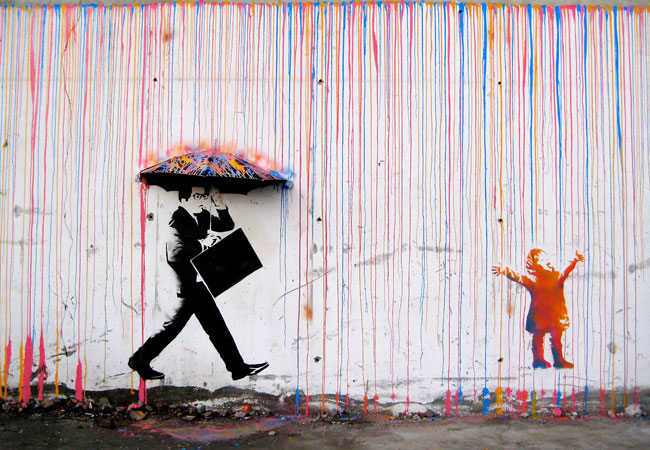
The second Pecha Kucha I chose to review from the class was Elliot’s presentation on Street Art. She provided information on the history and barriers related to Street Art as well as some key influencers such as Banksy.
Visual Presentation:
Immediately when Elliot’s presentation started it was visually appealing with a well thought out layout and colour scheme. The images she had incorporated throughout her presentation were consistent and easily tied into her topic. Her slides also seamlessly transitioned in conjunction with her speech, making it easy for the audience to follow.
Verbal Presentation:
As mentioned, Elliot’s verbal presentation flowed easily and it was evident she was well rehearsed. One small critic would be for Elliot to slow the pace of her speech down and perhaps decrease the length of her speech to do this. This would have helped the audience absorb the content better.
Clear Argument/ Structure:
Elliot provided a detailed scope at the beginning of her presentation outlining what she was going to discuss within her Pecha Kucha. This clear structure assisted in understanding her topic. She mostly chose to focus on key influencers of Street Art, in which she would introduce, provide an example(s) and then evaluate. In the future however perhaps Elliot should focus less on examples and instead discuss the main ideas, as it got slightly monotonous when she was evaluating serval artworks.
Evidence of Research:
Within the presentation there was clear evidence of what key influencers thought through the use of quotes and references to the Press/ News. Such details demonstrate that Elliot has researched the topic well. It also made the presentation more cohesive and articulate.
Elliot has produced an impressive presentation that fit the criteria and was interesting. It was clear that she had a passion for Street Art because the presentation provided plenty of analysis and in depth research. By adding her own personal evaluation at the end about her belief of how art conveys messages, Elliot highlighted her extensive knowledge.
The Pecha Kucha from my fellow class mate Sam, discussed the important design trends and movements throughout time. He outlined and explained topics such as the Industrial Revolution, Art Nouveau and Modernism.
Visual Presentation:
The visual presentation consisted for one photo per slide, which I believe was a good interpretation of the task as a Pecha Kucha is 20 images with 20 seconds per slide. Many other class mates incorporated text in their presentations and while I like this style better, the brief was to create a Pecha Kucha not a regular timed PowerPoint presentation. Thus I enjoyed Sam’s use of clear images to portray his topic. However the presentation was not well coordinated or practised with the timing of his speech. Also to be picky, on one slide there was background text that clearly wasn’t meant to be seen, in which decreased the aesthetic of the image.
Verbal Presentation:
Sam was clear in his oral presentation and well articulated his information. Yet he was noticeably nervous and made no eye contact with the audience. I believe he should have cut down his word count in his speech in order to effectively engage with the class and reduce his talking pace.
Clear Argument/ Structure:
Overall while I understood what Sam was explaining, if he was to present that speech to a room of design novices I don’t know if they would be able to gage his argument and information. Due to the extensive range of topics that he was attempting to cover in such a short space of time, it was easy to get lost and confused with what he was talking about. There was no clear timeline of the events/ movements discussed, which decreased the scope of the presentation. In the future I believe Sam should focus on a smaller variety of topics that relate, and introduce this at the beginning of the presentation.
Evidence of Research:
There was a major lack of evidence within Sam’s presentation. He made reference to one idea when he said “it is said that design is…” but never provided a name or figure from whom this came from. While it may state this in his transcript, it is important to clearly highlight literature to make what your saying sound more developed and to back up what you are talking about.
Overall Sam needs to work on developing his presentations further and spend extra time practising before the due date. Early on in the Pecha Kucha I honestly did not know what the topic was until about mid way through when I realised it was a combination of too many things. For future presentation’s planning would be essential to helping Sam scope the topic and focus on only the most important aspects.
“A brand is a name, term, design, symbol, or any other feature that identifies one seller’s good or service as distinct from those of other sellers” (American Marketing Association, 2017). Branding creates an identity for the company and its goods or service. The idea of branding originated from burning wood and livestock with metal symbols, to portray ownership. It than evolved to distinguish quality in the 1820s when mass production was at a large. In the 1870s trademarks could be registered in order to prevent competitors from creating similar products. This helped to make trade simpler and helped society easily recognise goods and services.
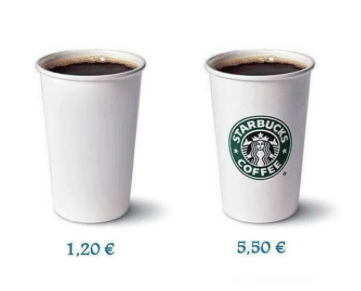
From craftsmanship to today’s high saturation of branding and logos it is evident that visual identity is important within the realm of visual communication and design. Nowadays branding is not only used to make goods and services recognisable but has become an essential part of everyday life (Bulatović, I., Škorić, S. and Jovanović, V. 2016). There are hundreds of iconically famous logos, icons and images that instantly depict the good or service. For example society see’s the golden arches in the red square and we automatically know it means McDonalds. This is powerful branding as the symbol has become globally embedded within society regardless of culture. Within today’s competitive market the socially constructed identity that is formed from a companies visual identity is crucial to business success and consumer loyalty. Branding today is is so much apart of society and our emotions that celebrity identity branding has become a powerful channel for connecting the values of a company with a famous influencer. An example of this is Usian Bolt for Puma. This marketing strategy coincides with branding to almost bring the company to physical life. Branding can also be the difference between price. A plain white t-shirt can cost $2 at Kmart, however a white t-shirt with Gucci on it will cost around $450. Due to branding, luxury goods and services like Gucci have the ability to do this as they have created a clear market segment and consumer desire.
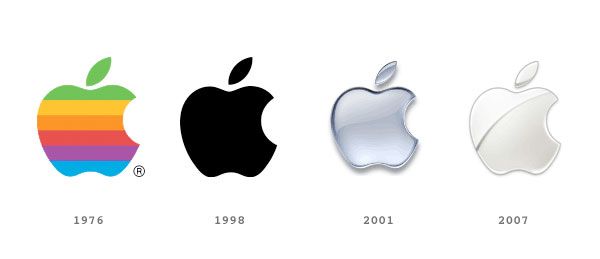
Designing a successful brand is based on compelling communication (Bulatović, I., Škorić, S. and Jovanović, V. 2016). Often companies have to re-brand due to low sales or high competition. Apple is an example of this when it underwent a major re-branding under the ownership of Steve Jobs in 1997 (DeMers, J. 2016). Prior to this Apple wasn’t attracting customers. Yet today most of the global population recognises the Apple icon and there is a desire to keep up with the latest Apple products. As such branding is essential for creating a memorable impression and experience for consumers so that society knows what to expect from the good or service.










 Made in Design