
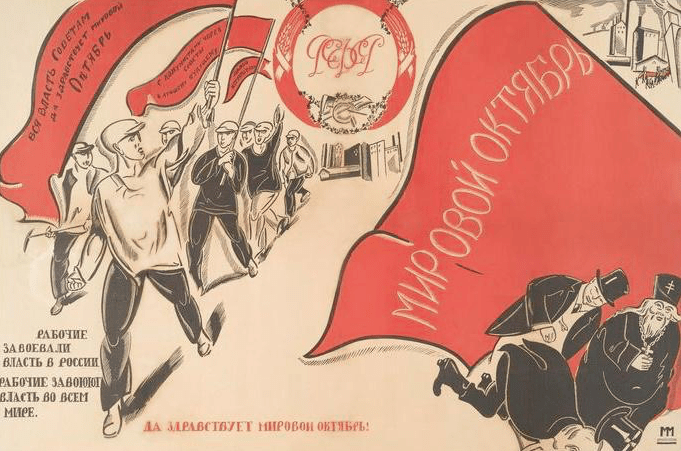
Due to the heavy impact and threat of WW1, propaganda became the main source of visual communication in order to recruit troops, create patriotism and guilt and develop information design. This sparked social influence as varieties of propaganda were created to appeal to different people and emotions. In the most unlikely way propaganda played a major role in revolutionising graphic design and resulted in experimentation and innovation in Soviet Russia.
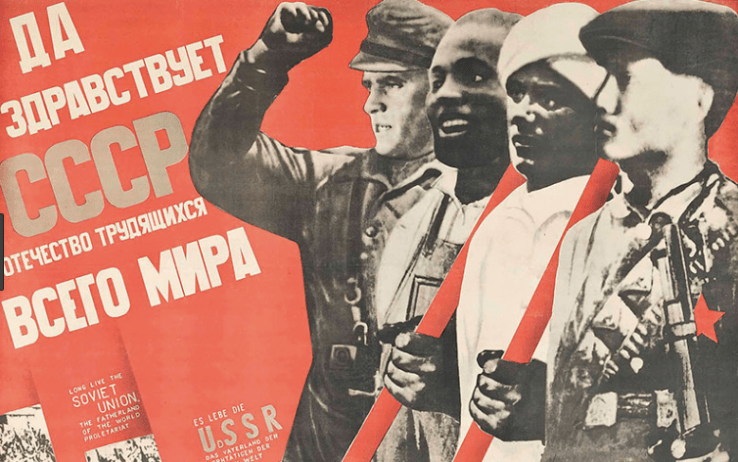
Soviet Russia was one of the most interesting countries when it comes to design during the WW1 and WW2 and in the postmodernism phase. During WW1 constructivism and constructivists gained momentum whereby unique work was rejected. Russia preferred mass produced goods and materials and creative output in Russia was considered to be a product of the state. Propaganda in Soviet Russia during WW1 included bold typography and a reduced colour palette using red, white and blacks. In WW2 Soviet Russian advertising campaigns reflected state ideologies and was extremely political. This included communist symbols and Marxist slogans and thus propaganda was a tool of power.
During the postmodernist period in the 1970s in Soviet Russia, Senezh Studio was a design school of the Union that focused on bringing new elements to Russian design such as semiotics, environment, and the uses of history and memory (Cubbin, 2017). Local expression and the existence of historic buildings in Soviet cities was threatened due to the principles of urban design. As such the designers at Senezh Studio attempted to relieve such pressures. Designers produced work that spanned industrial design, urbanism, model making, exhibition design and fine art in an attempt to challenge design thinking and culture more broadly.
Conclusively, Soviet Russia went through a major evolution between WW1 and the postmodern era. While design was conformed and strict, the ideology and history is interesting as this played a major role in structuring Russian design. WW1 and WW2 propaganda and Senezh designers were instrumental in the development of a critical and political discourse within Soviet design (Cubbin, 2017).
By Chelsea Buswell.
References:
Cubbin, T, 2017, Postmodern Propaganda? Semiotics, environment and the historical turn in So…: Discovery Service for Univ of Newcastle, Available at: http://eds.b.ebscohost.com.ezproxy.newcastle.edu.au/eds/detail/detail?vid=0&sid=193fc102-7d08-4124-bf82-82e9838ca0f4%40pdc-v-sessmgr01&bdata=JnNpdGU9ZWRzLWxpdmU%3d#AN=000397208400002&db=edswah , Accessed: 14 August 2018.
Collectors’ guide: 1920s Soviet propaganda posters, Christie’s, 2015, Available at: https://www.christies.com/features/Russian-posters-the-art-of-propaganda-6141-1.aspx Accessed: 14 August 2018.
Russian Propaganda during WWI, 2011, Available at: https://worldwaripropaganda.wordpress.com/2011/01/24/russian-propaganda-during-wwi/ ,Accessed: 15 August 2018.

 Made in Design